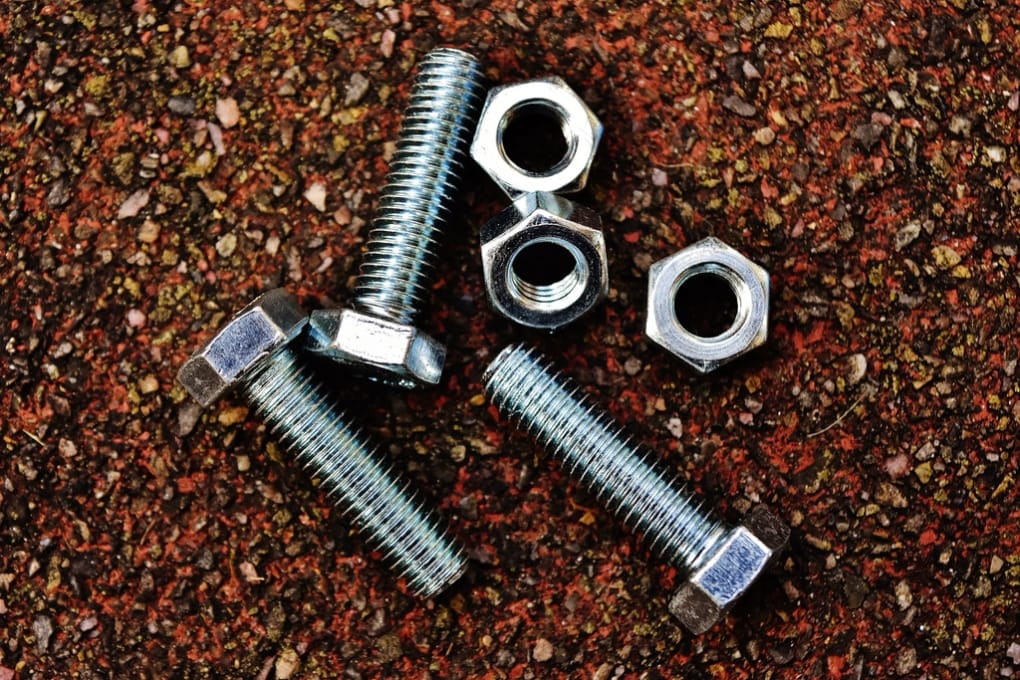
A quality spill puts you on the clock. Suspect parts are mixed into good stock, a customer may be waiting, and every hour of uncertainty costs money and credibility. In that moment you have three basic options for the affected material: sort it, rework it, or scrap it. Choosing the right one, quickly, is the difference between a contained problem and an expensive one.
Here is a simple framework, plus the step almost everyone should take before choosing at all.
First, contain. Then decide.
Before you decide what to do with the suspect material, make sure none of it can reach your customer. That is containment, and it comes first for a reason: it stops the bleeding while you figure out the fix. Isolate the suspect stock, certify what you know is good, and put a clear line between the two.
Only once the problem is contained should you work through the sort, rework, or scrap decision. Skipping straight to disposition while bad parts are still in play is how a small issue becomes a customer escape. (If a customer is already involved, containment is not optional. See our guide to containment services.)
When to sort
Sorting makes sense when the defect is present in only a portion of the stock and can be reliably identified. If you can separate good parts from bad, sorting recovers the conforming material and gives you a documented, accurate count of exactly how many parts were affected.
Choose sorting when:
- The defect is detectable by inspection to a clear criterion
- A meaningful share of the stock is still good
- You need certified good parts back into flow quickly
The output of a good sort is not just clean stock, it is data: how many parts, what defect rate, and where the problem is concentrated. That information often drives your root cause work.
When to rework
Rework makes sense when the defect is fixable and the recovered value is worth the effort. A missed operation, a bad label, a cosmetic flaw, or a component that can be replaced are all candidates. Rework turns scrap-bound parts back into usable product to your specification.
Choose rework when:
- The defect can be corrected to meet spec
- The cost of reworking is less than the cost of scrapping and replacing
- The reworked parts can be verified before they move on
The key is verification. Reworked product should be checked to confirm the fix before it ships. Learn more about rework and repair.
When to scrap
Scrap is the right call when the parts cannot be reliably fixed or sorted, or when the cost and risk of recovering them outweigh their value. It is the most expensive option per part, but sometimes it is the honest one. The goal is to make that decision deliberately, based on data, rather than defaulting to it under pressure.
The thread through all three: documentation
Whatever you choose, document it. Counts, defect rates, and disposition are what let you close out the issue with your customer, prove your containment worked, and feed your corrective action. A response with no paper trail is hard to defend and easy to repeat.
Why speed and outside help matter
The hardest part of a quality spill is that it lands when you can least afford it, mid-shift, short-handed, with a customer waiting. Pulling your own people off their jobs to sort through the night is slow and costly, and it rarely holds up as well as a dedicated response.
That is where a rapid-response partner earns its keep. An outside team can contain, inspect, sort, and rework without stopping your production, and can be on-site the same day. See how PLI's rapid response works.
Dealing with a quality spill right now? PLI can contain, sort, and rework fast. Request immediate support or call 216.440.6060, 24/7.
Read next